Every scene you have already shot is unsold ad inventory.
inlayd finds the placeable moments inside your finished film and television, renders brand product into them, scores every frame for quality, and delivers a full-resolution master. No reshoot. No change to your original.

Original master

inlayd render
Virtual product placement market context
42%
of TV viewers now use ad-skipping tools. In-scene placement cannot be skipped.
1.8B
streaming subscriptions worldwide — and catalogues with no integrations at all.
10×
higher viewer preference for in-content brand moments over mid-roll interrupts.
$2–7M
estimated incremental annual revenue from a single popular title at modest fill.
Everyone agrees the format works. The pipeline is what breaks.
Buyers are impressed by the technology and unconvinced by the operations: unclear scale, hand-built approvals, and renders that are one bad frame away from looking fake. inlayd is built for the operations.
6 MONTHS
A placement moves at the speed of email
Finding the moment, getting creative approval, matching the art — network pilots ran half a year per insertion. inlayd runs targeted analysis in hours and returns candidate renders the same day, with the shortlist scored and ranked before a human opens it.
GOVERNANCE
Rights, guilds, disclosure — per territory
Third-party programming needs distributor and guild clearance; every market discloses differently. Clearance state, blocked contexts and territory rules live on the asset, so an uncleared surface simply never reaches a render queue.
CREDIBILITY
One flickering can undoes the whole idea
A placement that reads as fake is worse than no placement. Every candidate carries a QA score — flicker, occlusion, colour match, edge integrity — and failures are diagnosed at the frame, not guessed at in a screening room.
Five stages, from mezzanine master to delivered version.
The same five stages your team will see inside the platform. Each one is a gate: nothing advances without a score and a signature.
Sliced into scenes
An hour-long master is too long to analyse whole. inlayd cuts it into scenes and reads the technical specs itself. The original stays untouched as source of truth.
Every surface, tiered and scored
Tables, walls, billboards, kiosks, screens. Each opportunity gets a tier from 1 to 4 and a confidence value, so you sell prominence rather than presence.
Brand rules, set once
A Brand & Product Asset Pack carries packshots, logo, palette, allowed and blocked contexts, preferred placement. Every campaign reuses it; QA enforces it.
Candidates you choose between
The agent proposes several treatments per scene. Reviewers compare them side by side against the QA score and approve, defer, or send back with a note.
Re-assembled, then exported
Approved scene patches stitch back into a single full-resolution master, with versioned deliverables per territory and per distribution partner.
What the inventory looks like after a catalogue scan
4 TITLES · 312 SCENES · 1,140 OPPORTUNITIES
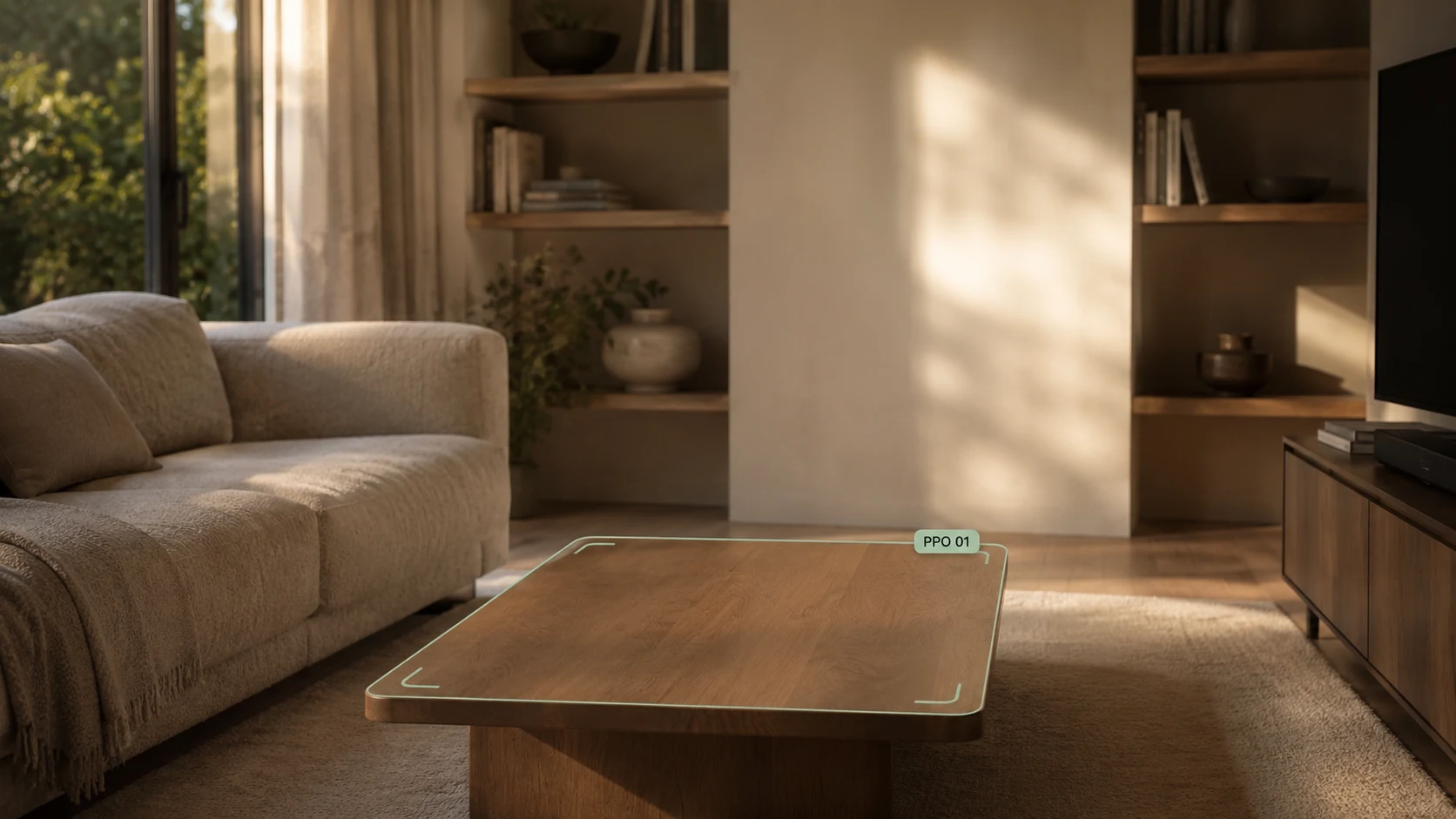
Living-room tabletop
Detected coffee-table surface
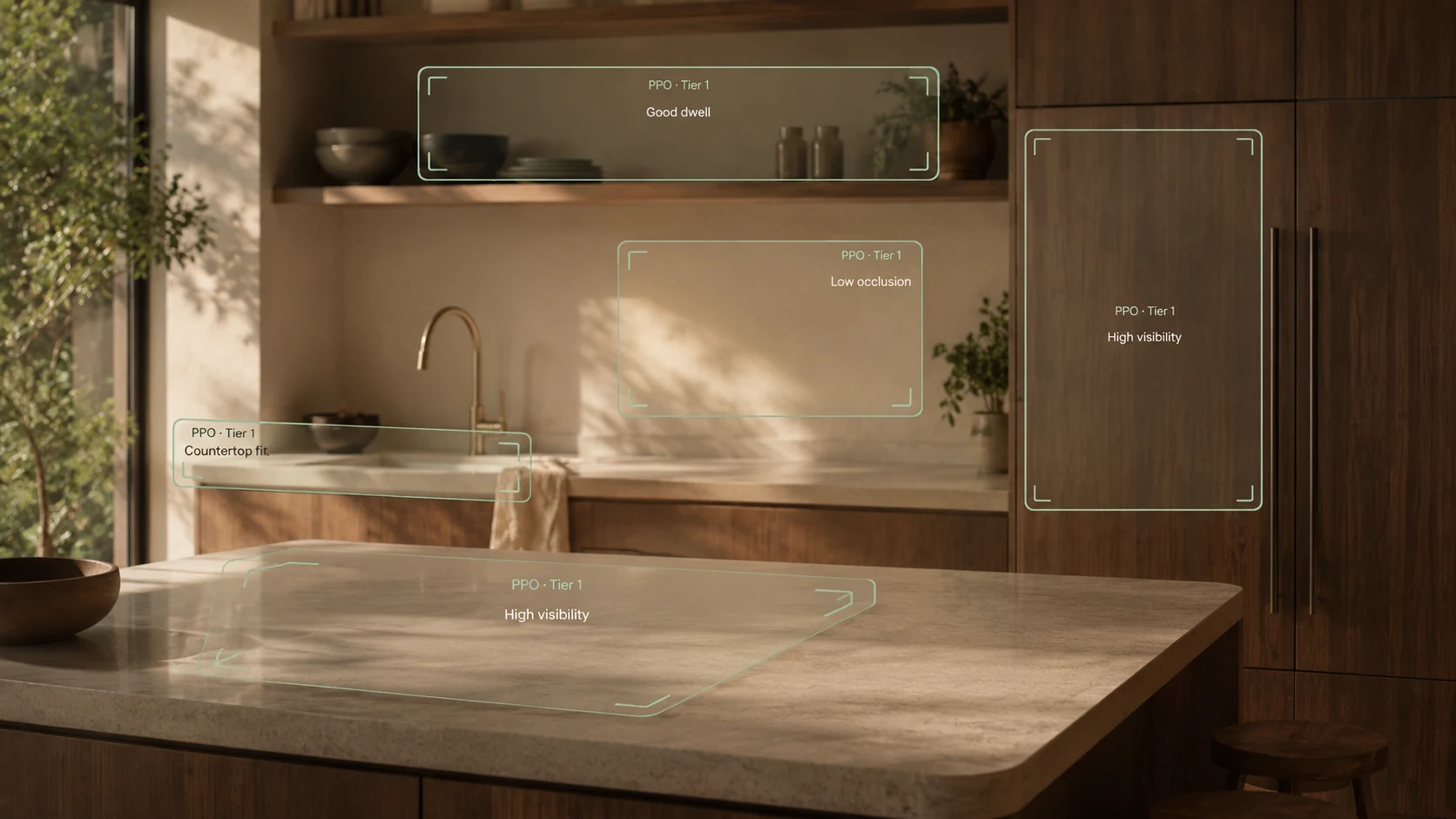
Kitchen surfaces
Tier 1 opportunities across five surfaces
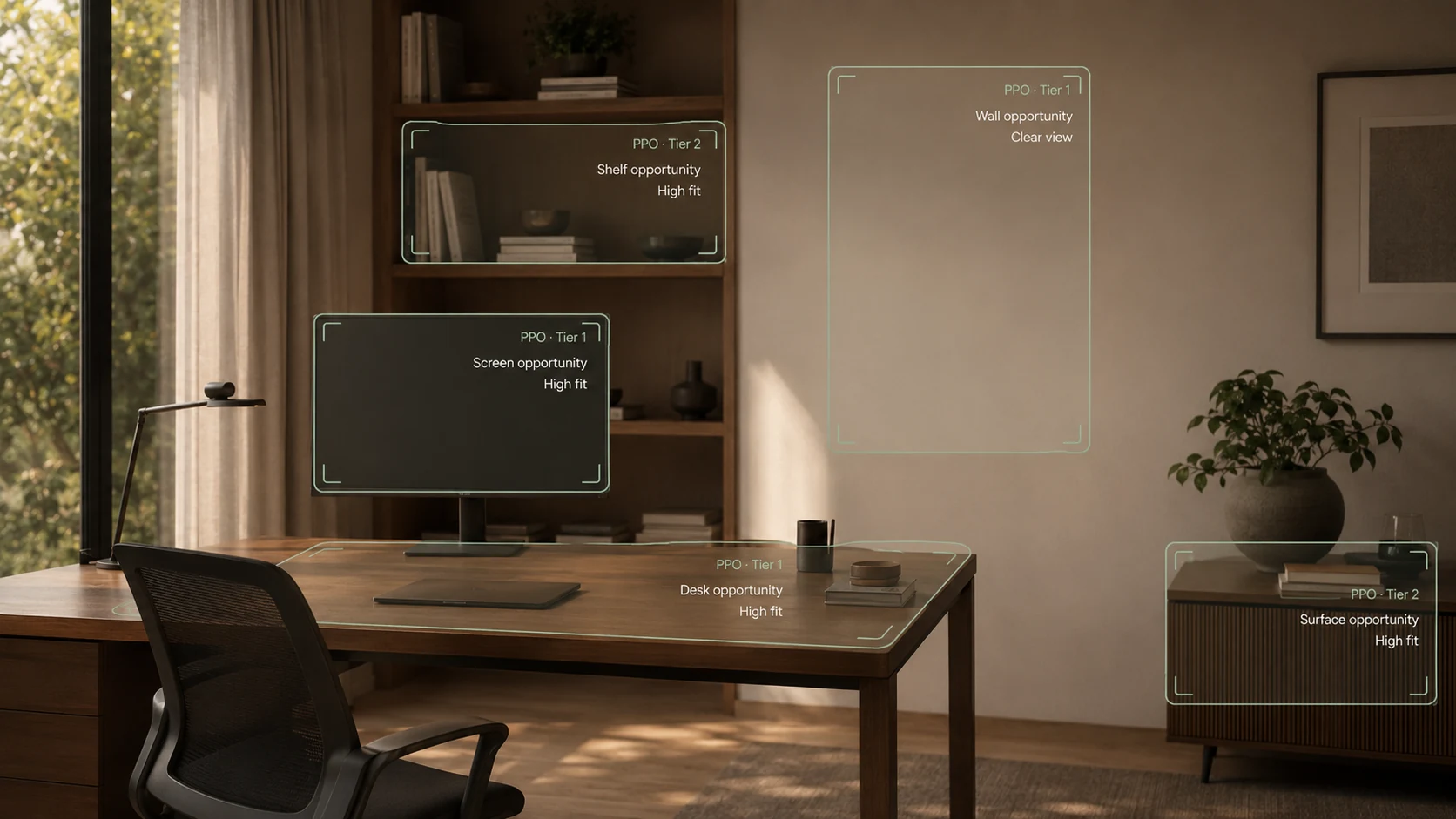
Home-office surfaces
Tier 1 and Tier 2 opportunities
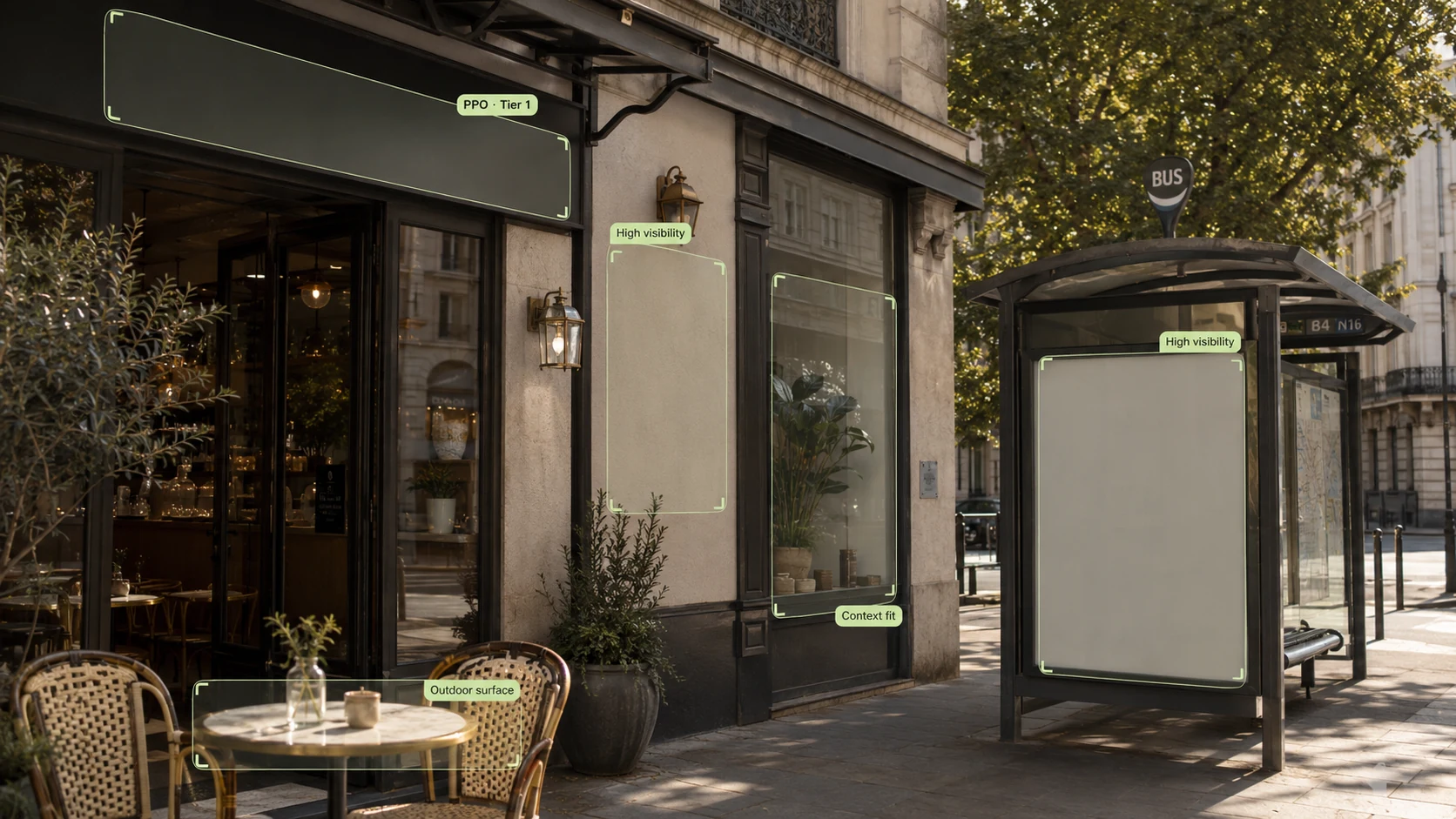
Street-level surfaces
Signage, façade, window, table, and transit panel
Built like ad operations software, not like a VFX favour.
Scene-level inventory
Browse opportunities by title, play the scene to see the moment in context, and add the ones you want to a campaign. Sell a moment, not a guess.
Tier 1–4 confidence
Prominence, dwell, focus and clearance collapse into one tier and one number — the language a media buyer can price against.
Brand safety, encoded
Allowed contexts, blocked categories, preferred placement and palette are attached to the brand, and honoured by both the agent and QA.
Targeted analysis
A campaign analyses only its own shortlist of titles and creatives. New findings layer on the shared library without disturbing it.
QA with diagnosis
Failures name themselves — flicker above threshold, occlusion break, colour drift — and point at the frame range that caused them.
Master-safe delivery
inlayd never overwrites your source. Approved scenes are patches; assembly produces a new versioned master and an export set per territory.
Two sides of the same frame.
Studios, broadcasters, FAST channels and rights holders
You are sitting on thousands of hours produced with no commercial integrations, monetised only by licensing and subscriptions.
0
reshoots required
1,140
opportunities in 4 titles
Brands, agencies and branded-content teams
You want presence inside premium storytelling without committing a year ahead to a product that may not exist by air date.
Same day
first candidate renders
3
treatments per scene
The content is already paid for. The inventory is free money you haven't counted.
Re-shooting for a brand is prohibitive. Layering a brand into a finished scene is a render. That difference is the entire business case — and it repeats every time a placement deal expires.
Model it on your catalogue →Cumulative views on one popular title
50M
Placeable surfaces found per hour of content
~90
Incremental production cost
$0
Estimated incremental revenue / year
$2–7M
The five questions every buyer asks.
Does a passive placement actually do anything?
Only if it isn't passive. inlayd tiers by prominence, dwell and focus — a Tier 1 surface is held in frame and in focus, adjacent to the action. Tier 3 and 4 exist so you can price them differently or decline them.
Who signs off on the creative?
Whoever you say. Review is a stage in the workflow with named approvers, comparison against QA, and a deferral path — not a thread of screenshots between three companies.
What about third-party programming, distributors and guilds?
Clearance status and territory rights are properties of the asset. Uncleared surfaces are marked Tier 4 and cannot enter a render queue until someone with authority clears them.
How do we handle disclosure in different markets?
Exports are per territory, so disclosure treatment and the placement set can differ by market from one approved assembly.
Are you touching our master?
No. The mezzanine you upload is read-only. Work happens on scene patches, and assembly writes a new versioned master alongside the original.
Send us one episode. We'll send back the inventory inside it.
A scan of a single asset, tiered and scored, with two candidate renders against a brand of your choosing. No integration, no commitment.
Typical first scan returns in 48 hours.